





Open AI Integrated Solutions can connect artificial intelligence with a CRM so information from inquiries, emails, customer records and connected business systems can be processed more efficiently. Instead of using AI as a separate chatbot that employees need to copy information into manually, an integrated setup can allow approved AI functions to read relevant CRM data, prepare structured information and trigger defined actions.
This does not mean giving AI unrestricted control over customer information. A useful CRM integration needs clear permissions, reliable data, defined workflows and human approval where decisions or customer communications carry business consequences.Current OpenAI technology supports function calling, which allows AI models to interact with external applications and tools through defined functions. Structured Outputs can also be used to return information in an expected format, which is useful when an AI workflow needs to create or update structured records rather than produce free-form text.
For Australian businesses considering AI integration, the important question is therefore not simply whether AI can connect to a CRM. It is what the connection should be allowed to do, which data it needs and where people should remain responsible for the final decision.Open AI Integrated Solutions can support CRM work when the AI is connected to clearly defined sources of information and business actions.
The greatest value often comes from reducing repetitive administration rather than trying to replace the entire sales or customer service process.
How Open AI Integrated Solutions can work with CRM data
Open AI Integrated Solutions can be designed to retrieve information from a CRM through APIs or approved application functions.
For example, an AI workflow could be allowed to retrieve a customer record, identify recent interactions, summarize previous communication and prepare information for an employee.
OpenAI’s function-calling capability is specifically designed to let models connect with external systems and request defined actions. Those functions can be organised around areas such as CRM, billing or order management rather than giving the model unrestricted access to an application.
The AI should only receive the data and functions required for the task. If a workflow only needs a customer’s name, inquiry type and recent notes, there may be no reason to expose the entire CRM record.
Where Open AI Integrated Solutions can reduce repetitive CRM work
Open AI Integrated Solutions can help with tasks such as summarizing notes, categorizing inquiries, extracting contact details and preparing structured information for CRM fields.
This can reduce situations where employees repeatedly copy details from emails or forms into the CRM.
However, automation should be designed around a clear business process.
AI should not automatically change customer records simply because it can. The business first needs to decide what information may be updated automatically, what should be suggested for review and what should remain entirely manual.
That is where IT Consulting can be useful. The technical connection is only one part of the project. The workflow itself needs to make operational sense.
Use Open AI Integrated Solutions to Improve Lead Handling
Open AI Integrated Solutions can help businesses deal with incoming leads more consistently by analyzing information before someone manually reviews every inquiry.
The goal should be to help employees identify what requires attention rather than allowing AI to make unsupported assumptions about a potential customer.
How Open AI Integrated Solutions can help qualify incoming leads
Open AI Integrated Solutions can examine information submitted through an approved web form, email or connected system and identify relevant details.
For example, an incoming inquiry may contain a person’s name, organization, requested service, location and preferred contact method.
Instead of asking a staff member to extract those details manually, AI can prepare them as structured data for review.
Structured Outputs are useful for this kind of workflow because the application can require information to follow a defined schema. This makes structured CRM processing more reliable than asking a model to return unrestricted text that another application must interpret.
The business should still decide how uncertain or incomplete information is handled.
If important details are missing, the workflow should flag them rather than invent them.
How Open AI Integrated Solutions can support faster CRM follow-up
Open AI Integrated Solutions can also help turn a new lead into clear next steps.
After reading the permitted CRM context, AI could prepare a short lead summary, identify the requested service and suggest an appropriate follow-up task.
It might also prepare a draft response for an employee to review.
Human approval is particularly useful where the message contains pricing, commitments, deadlines or advice that could affect the customer relationship.
This approach allows AI to reduce repetitive preparation while keeping accountability with the employee responsible for the conversation.
Reduce Manual Data Entry With Open AI Integrated Solutions
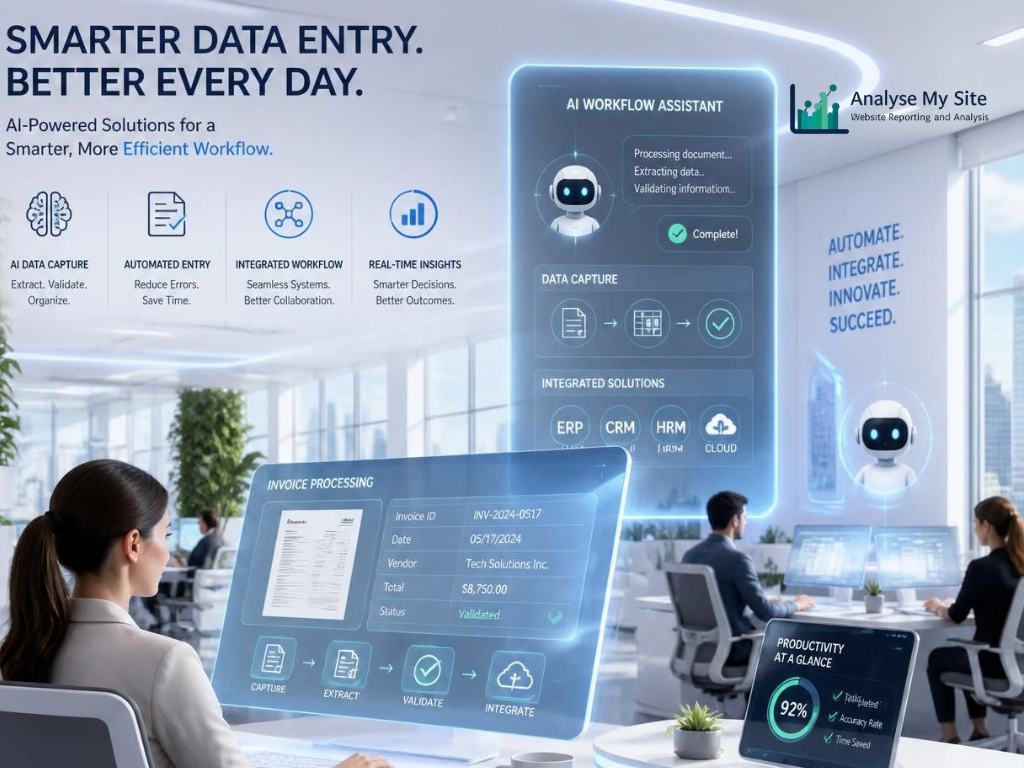
Open AI Integrated Solutions can help move approved information between connected business systems and a CRM.
This is especially useful where the same information is currently being typed into several places.
How Open AI Integrated Solutions can capture information automatically
Open AI Integrated Solutions can take information from connected sources such as approved emails, forms or applications and convert it into CRM-ready data.
A customer inquiry could, for example, be classified before a proposed CRM record is created.
A meeting summary could be converted into notes and proposed follow-up actions.
An order or support request could also be associated with an existing customer record if the required identifiers are available.
OpenAI’s current function-calling tools are intended for this type of connection between AI models and external application functionality.
The integration layer remains important because the CRM or middleware ultimately controls whether an action is permitted.
Why Open AI Integrated Solutions still need data quality checks
Open AI Integrated Solutions cannot compensate for a CRM full of duplicate, outdated or poorly structured records.
Automation can actually make a data-quality problem worse if incorrect information is allowed to move between systems faster.
Businesses should therefore decide how duplicates are identified, which fields are authoritative and how incomplete records are handled.
Validation is particularly important before an automated process creates new customers, changes contact details or merges information.
The better the underlying data and workflow rules, the more useful the AI layer can become.
Turn CRM Activity Into Follow-Ups With Open AI Integrated Solutions
Open AI Integrated Solutions can help businesses move from recording customer activity to acting on it.
CRM systems often contain useful information that is never turned into a clear next step because employees are busy or follow-up remains manual.
How Open AI Integrated Solutions can prepare follow-up actions
Open AI Integrated Solutions could analyse recent authorized CRM activity and prepare suggested tasks.
For example, the system might identify that an inquiry has not received a response, summarize what the customer asked for and prepare a proposed follow-up.
Another workflow could review approved meeting notes and prepare a task for the responsible staff member.
The AI may also help summarize long histories so the employee does not need to read every previous note before continuing the conversation.
The useful outcome is not simply more generated text. It is clearer action based on relevant CRM context.
Where Open AI Integrated Solutions should keep human approval
Open AI Integrated Solutions should not automatically remove human involvement from every CRM workflow.
Customer-facing messages can contain commitments, prices, service descriptions or sensitive information.
A suitable workflow may therefore prepare the content while requiring an employee to approve it before sending.
The same principle applies to deleting records, changing customer status or making decisions that affect eligibility, credit, contractual obligations or other significant outcomes.
Automation works best when the organization decides in advance which actions are low risk and which require review.
Connect Open AI Integrated Solutions With Other Business Systems
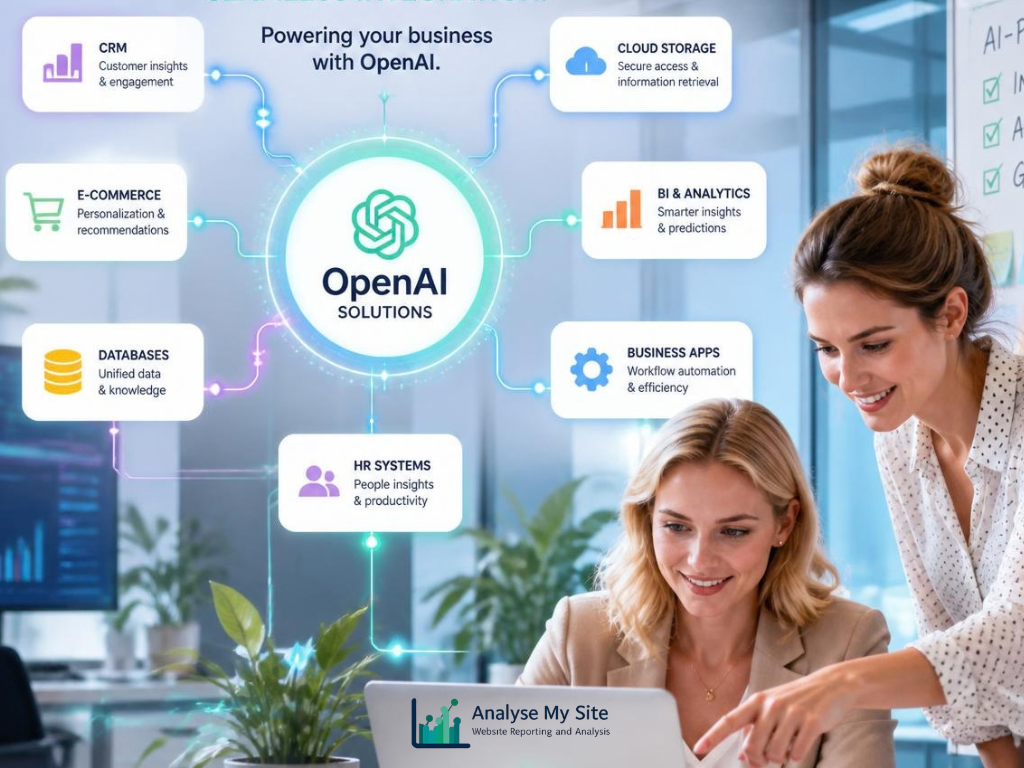
Open AI Integrated Solutions can become more useful when the CRM is connected with the other applications already used by the business.
The aim is usually to improve information flow rather than replace every existing platform.
How Open AI Integrated Solutions can connect CRM and Cloud Solutions
Open AI Integrated Solutions may connect a CRM with Cloud Solutions containing documents, internal applications or other approved data.
For example, an AI workflow might retrieve a customer record from the CRM and then reference an approved document library when preparing a summary.
The connection should be built with authentication, permissions and access limits appropriate to each system.
This is another reason an integration project should begin with process mapping.
Businesses need to know which system is responsible for each type of information before AI begins moving data between them.
Backup Solutions should also be considered as part of the broader architecture. An AI integration does not replace the need to protect CRM data, configuration and connected business information against loss.
How Open AI Integrated Solutions can link sales and e-commerce systems
Open AI Integrated Solutions may also connect CRM workflows with e-commerce platforms such as Shopify or BigCommerce where supported integration and APIs are available.
Shopify’s current APIs allow authorized applications to read and write business data such as products, orders, customers, inventory and metafields, with access controlled through authentication and scopes.
That creates possibilities for workflows where authorized commerce information is brought into a CRM or used to support customer service.
A business might want CRM users to see relevant customer or order context without switching between multiple applications.
The same principle applies to BigCommerce integration where suitable APIs or middleware are available: the design should start with the business process and permitted data rather than connecting systems simply because integration is technically possible.
Secure Open AI Integrated Solutions Before Automating CRM Work
Open AI Integrated Solutions need appropriate security and reliability controls because CRM platforms often contain valuable customer and business information.
The integration should be designed around minimum necessary access.
How Open AI Integrated Solutions should protect CRM access
Open AI Integrated Solutions should use defined authentication, permissions and application scopes rather than shared credentials or unrestricted access.
The AI workflow should only be able to read or change the resources required for its job.
Shopify’s API guidance demonstrates this same access-control principle by using scopes to determine which resources an application can read or write and recommending that applications request only the access needed for their function.
The same design principle is useful for CRM integration.
If the workflow only needs to read new inquiries and prepare summaries, it should not automatically receive permission to delete customer records or alter unrelated data.
Security should therefore be planned when the workflow is designed, not added after it is running.
Why Open AI Integrated Solutions need reliable Backup Solutions
Open AI Integrated Solutions also depend on the reliability of the systems around them.
If a CRM integration fails, businesses need a way to understand which actions completed successfully and which did not.
Logging, error handling and appropriate Backup Solutions become important parts of the overall system.
AI-generated actions should not disappear into an invisible workflow.
Businesses need enough visibility to identify failed updates, duplicate actions and unexpected results.
Cloud Solutions and CRM backups should therefore be considered alongside the AI integration rather than treated as unrelated IT concerns.
Decide Whether Open AI Integrated Solutions Suit Your Business
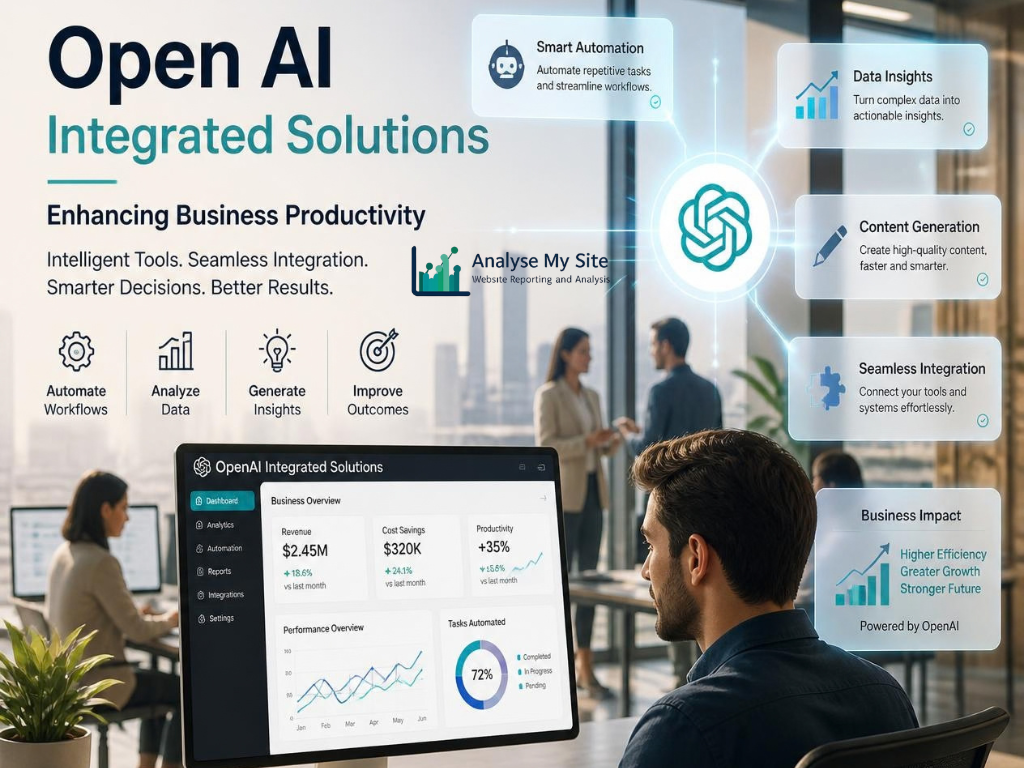
Open AI Integrated Solutions can be valuable when there is a clear process to improve.
The technology is less useful when the business has not yet decided what problem the integration is supposed to solve.
How Open AI Integrated Solutions fit into wider IT Consulting
Open AI Integrated Solutions projects often benefit from IT Consulting before development begins.
A useful review can identify which systems are involved, how information currently moves between them, where employees repeat the same task and where automation would create a genuine operational benefit.
The business can then decide whether the solution needs a direct API integration, middleware, an existing connector or a more customized workflow.
It is also worth deciding how success will be measured.
Reducing manual data entry, improving response consistency or shortening administrative processing are clearer goals than simply saying the organization wants to “use AI”.
Where Open AI Integrated Solutions can extend beyond CRM
Open AI Integrated Solutions can also extend into other connected business environments where there is a practical reason to share information.
Voice Over IP platforms may provide call information that can be associated with CRM activity where appropriate integration are available.
E-commerce systems such as Shopify and BigCommerce can contribute order or customer context.
Augmented Reality in E-Commerce may also interact with broader customer data and product experiences, although it represents a different use case from ordinary CRM automation and should only be integrated where there is a clear customer or operational benefit.
Shopify is also actively developing ways for AI agents to interact with application data and actions, demonstrating how commerce platforms are moving toward deeper agent-compatible integration.
For most businesses, the best starting point remains much simpler.
Identify one repetitive CRM process, define the information required, decide what AI may do, keep people responsible for important decisions and measure whether the integration actually improves the workflow.
Open AI Integrated Solutions can connect AI with a CRM, but the quality of the result depends less on adding more AI and more on building a clear, secure and useful connection between the systems your business already relies on.